About Us
Contrary to popular belief, Lorem Ipsum is not simply random text. It has roots in a piece of classical Latin literature from 45 BC, making it over 2000 years old.
Get a free quote
Packaged Drinking Water Plant
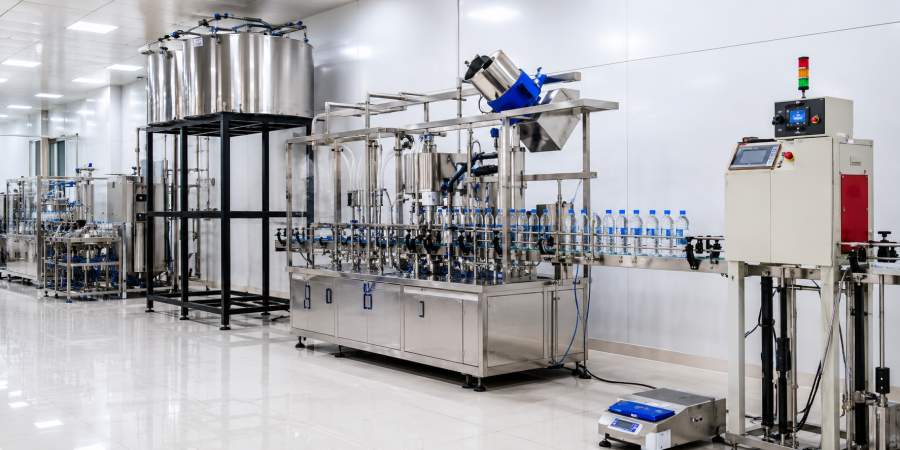
Mineral Water / Packaged Drinking Water Project
We specialize in setting up complete, turnkey Mineral Water and Packaged Drinking Water Projects. Our solutions cover every step of the process—from raw water sourcing, advanced pre-treatment, membrane purification, and disinfection, to automated PET bottle blowing, rinsing, filling, capping, and in-house quality testing compliance.
Water Source & Transfer
Water should be collected from a well-protected, easily available, and un-contaminated source. Acceptable sources include Borewell water lines, Closed Ring Wells, Municipal Supply Lines, or other treatable water sources.
Raw water is transferred to raw water storage tanks using dedicated pumping systems and contamination-free piping. We utilize high-efficiency Submersible Pumps or surface-mounted Centrifugal Pumps fitted with premium UPVC, CPVC, or Stainless Steel (SS) piping networks tailored to application needs.
Water Treatment System
Our comprehensive purification process relies on a multi-stage engineering approach to guarantee water purity and safety:
Core Treatment Equipment
-
Raw Water Feed Pump & Chlorine Dosing System
-
Multi-Media Filtration for Coarse Particle Removal
-
Activated Carbon Filtration (De-chlorination & Odor Removal)
-
Water Softening / Anti-Scalant Treatment Process
-
Reverse Osmosis (RO) or Nano / Ultra Filtration
-
Purified Water Storage in Stainless Steel (SS) Tanks
-
Stainless Steel Transfer Pumps & Micron Cartridge Filtration (0.2 Micron)
-
UV Sterilization & Ozone Disinfection Systems
Process Description
Raw water is first chlorinated or ozonated to oxidize organic impurities and kill harmful bacteria and viruses. A feed pump then passes this water through a Multi-Media Filter to remove suspended solids, followed by an Activated Carbon Filter for de-chlorination, color, odor, and colloidal turbidity removal.
The de-chlorinated water is dosed with an anti-scalant solution (or routed through a Softener) to prevent membrane scaling. It then passes through a 10-micron cartridge filter to lower the Silt Density Index (SDI) and protect the downstream high-pressure RO pump and membranes. The Reverse Osmosis Unit reduces dissolved salts (TDS) by up to 95%. Purified water is stored in hygienic Stainless Steel tanks, passed through a 0.2-micron cartridge filter, UV sterilizer, and an inline Ozonator to provide a reliable residual disinfection effect prior to filling.
In-House Water Testing & Laboratory Facility
To maintain Bureau of Indian Standards (BIS) compliance, every plant requires an in-house Chemical and Microbiological Laboratory for ongoing quality testing. External BIS-approved labs perform routine tests for specialized pesticide and radio-nuclear parameters.
| Laboratory Section | Space Requirement | Key Features & Scope |
|---|---|---|
| Chemical Lab | Min. 150 sq. ft. | Equipped with dedicated shelves, cupboards, reagents, chemical-grade glassware/PP ware, and BIS-compliant testing instruments. |
| Micro-Biology Lab | Min. 150 sq. ft. | Sterile environment equipped with specialized microbiological testing equipment, incubators, reagents, and media as mandated by BIS. |
Production & Packaging Machinery
1. PET Bottle Blowing Machine
Purified water is packaged in PET bottles produced in-house using stretch blow molding machinery coupled with heavy-duty air compressors and compressed air dryers.
Available Production Capacities:
- Semi-Automatic: 600 BPH, 1,200 BPH, and multiples of 600 BPH
- Fully Automatic: 1,200 BPH / 1,800 BPH / 2,400 BPH / 3,600 BPH / 4,500 BPH+
Machine Accessories & Components:
- Preform Storage Hopper & Automatic Preform Feeder
- Online Air Conveyor Bottle Feeder
- High-Pressure Air Compressor with Compressed Air Dryer & Filters
- Industrial Chiller Unit
- Hard Chrome Diamond-Finish PET Bottle Molds (custom capacities)
2. PET Bottle Rinse, Fill, Cap & Label Machine
Integrated monoblock machines handle automatic rinsing, filling, and capping under strict hygienic conditions (touchless operation).
- Filling Range: 500 ml to 2.0 Liters using interchangeable change parts.
- Labeling Options: Hot Melt BOPP Labels or PVC Shrink Labels.
- Speed Options: 24 BPM / 40–50 BPM / 72–80 BPM / 100–120 BPM / 150–300+ BPM.
Standard Features Included:
- Stainless Steel In-feed Air Conveyor (2.5m) and Out-feed Conveyor (7.5m) with drives
- Centralized Electrical Control Panel with PLC, timers, and safety relays
- Out-feed Inspection Light Board & Shrink Tunnel for label/sleeve shrinking
- One set of change parts included (additional bottle size sets optional)
- Computerized Digital Batch & Date Coding Machine (Optional)
3. 20-Liter Jar Washing & Filling Machine
Designed specifically for large-format 20L returnable water jars, combining washing, filling, and capping into a unified workflow.
Integrated Units: Jar Brusher Unit | Dual-stage Jar Washer | Jar Filler | Jar Capper
Available Jar Line Capacities:
- 60–80 Jars / hour
- 120 Jars / hour
- 240 Jars / hour
- 500 Jars / hour